01
Marketing-to-operations architecture
The public site, lead intake, CRM, customers, invoices, and schedule are connected so customer acquisition continues into daily work.

Automotive operations CRM
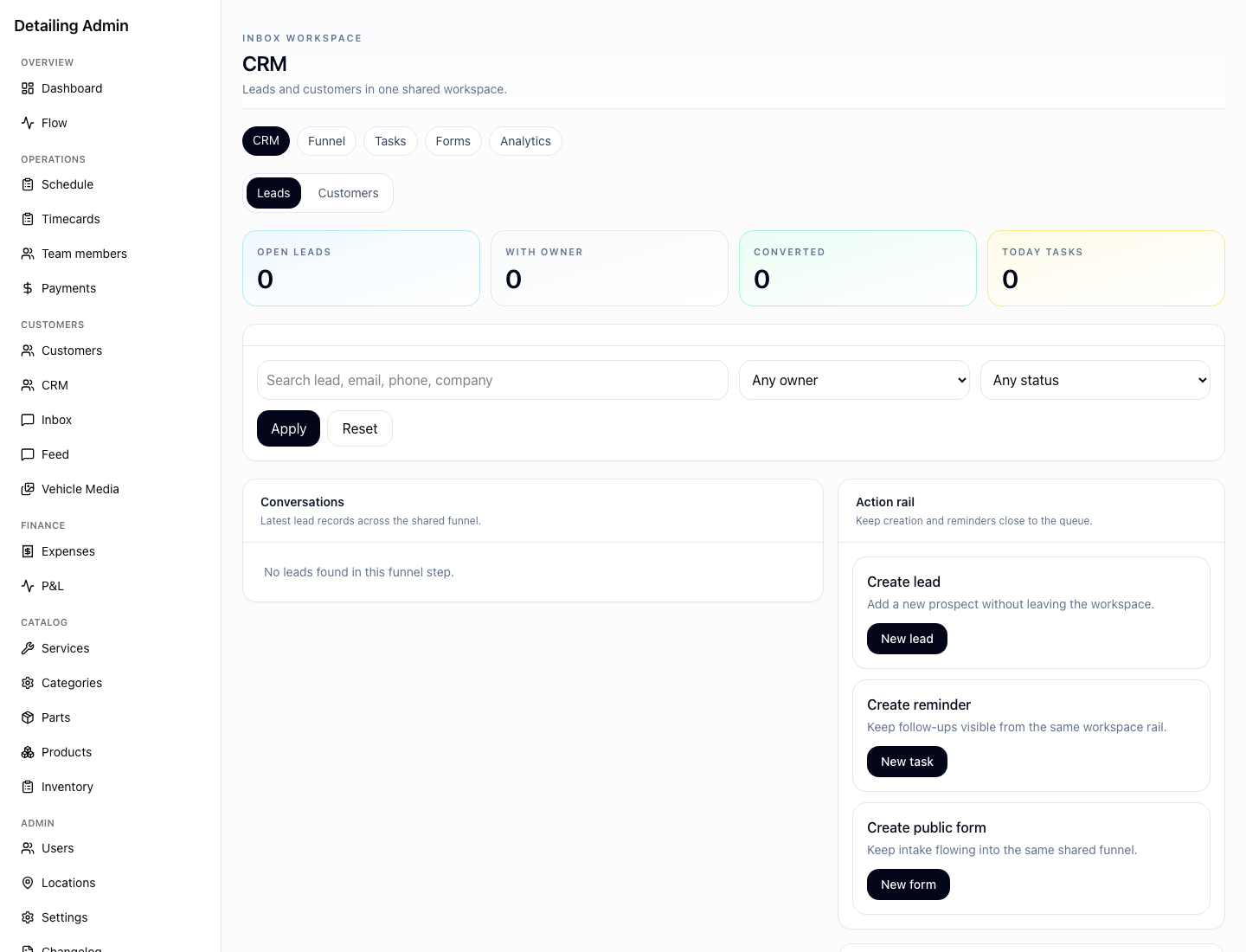
GarageLink CRM is a vertical SaaS and microservice platform delivery record for automotive operations. We connected a public automotive services website, quote/intake flows, CRM workspace, customer records, scheduling, finance visibility, marketplace extensions, and internal admin screens into one business system. The platform is split across 14 GarageLink microservices plus web and API layers, so shops can add capabilities without turning the product into one fragile monolith.

Delivery record
The work connected marketing, CRM, marketplace extensions, microservices, and daily shop operations into one product architecture.
01
The public site, lead intake, CRM, customers, invoices, and schedule are connected so customer acquisition continues into daily work.
02
GarageLink is organized into 14 domain services with a web app and API facade, allowing modules to evolve without rewriting the whole product.
03
The marketplace exposes installable modules with dependencies, permissions, entitlements, and data-retention behavior per tenant.
04
The CRM screens are grounded in real automotive service work: customers, quotes, reminders, invoices, schedule, media, payroll, and finance visibility.
Product screens
Key screens, workflow states, launch pages, and operating surfaces are arranged as a moving system instead of static thumbnails.
Public quote website
CRM command center
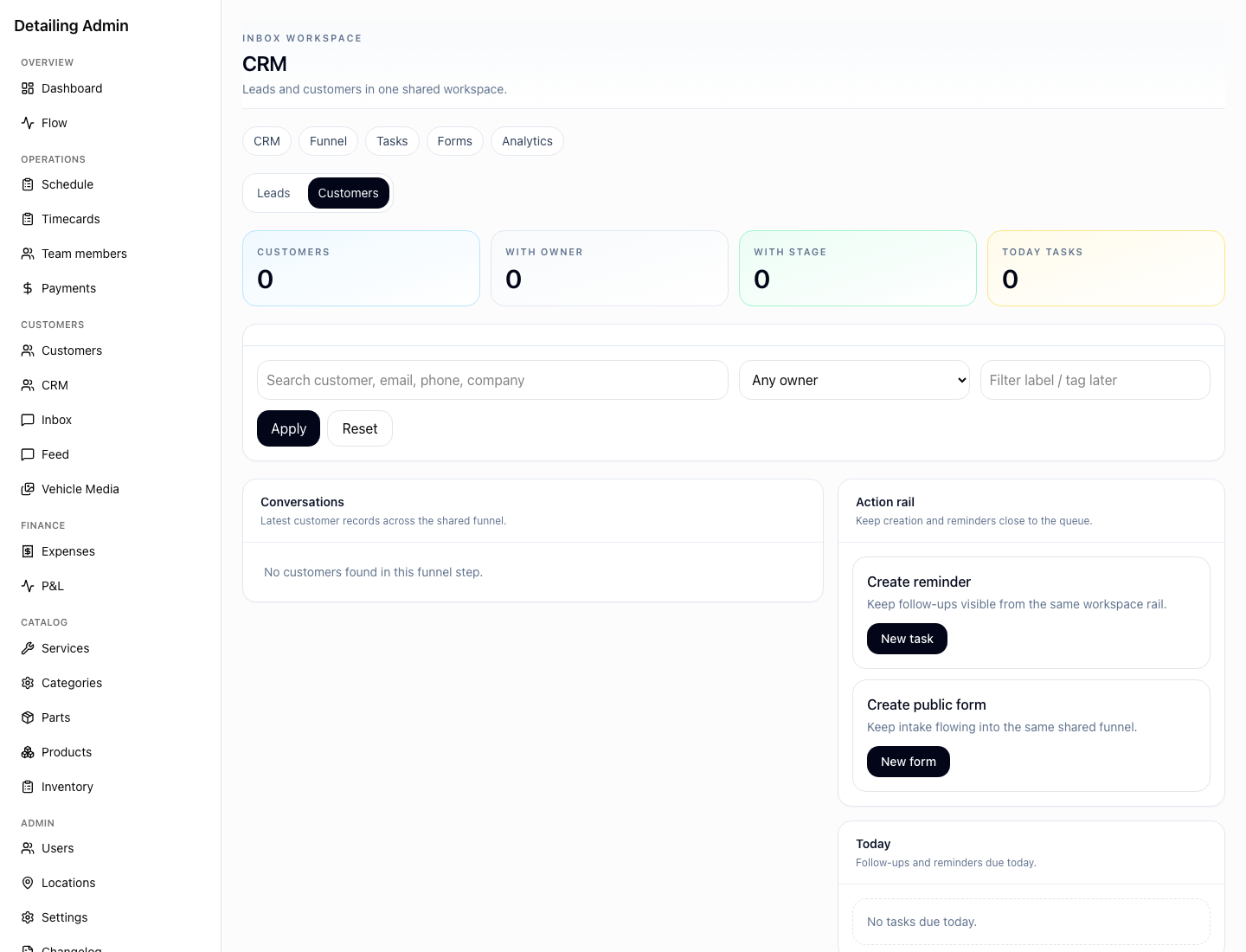
Customer workspace
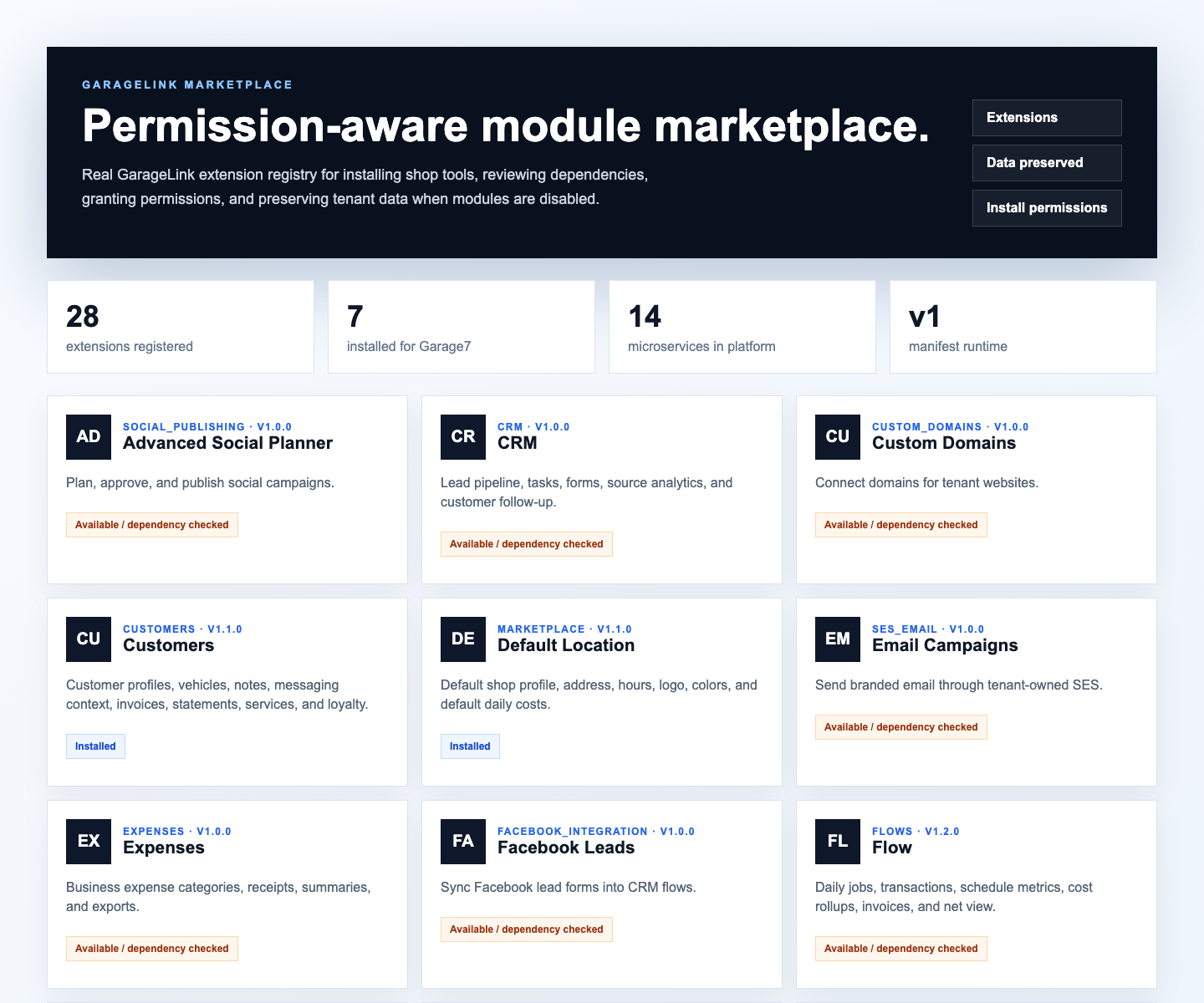
Marketplace extensions
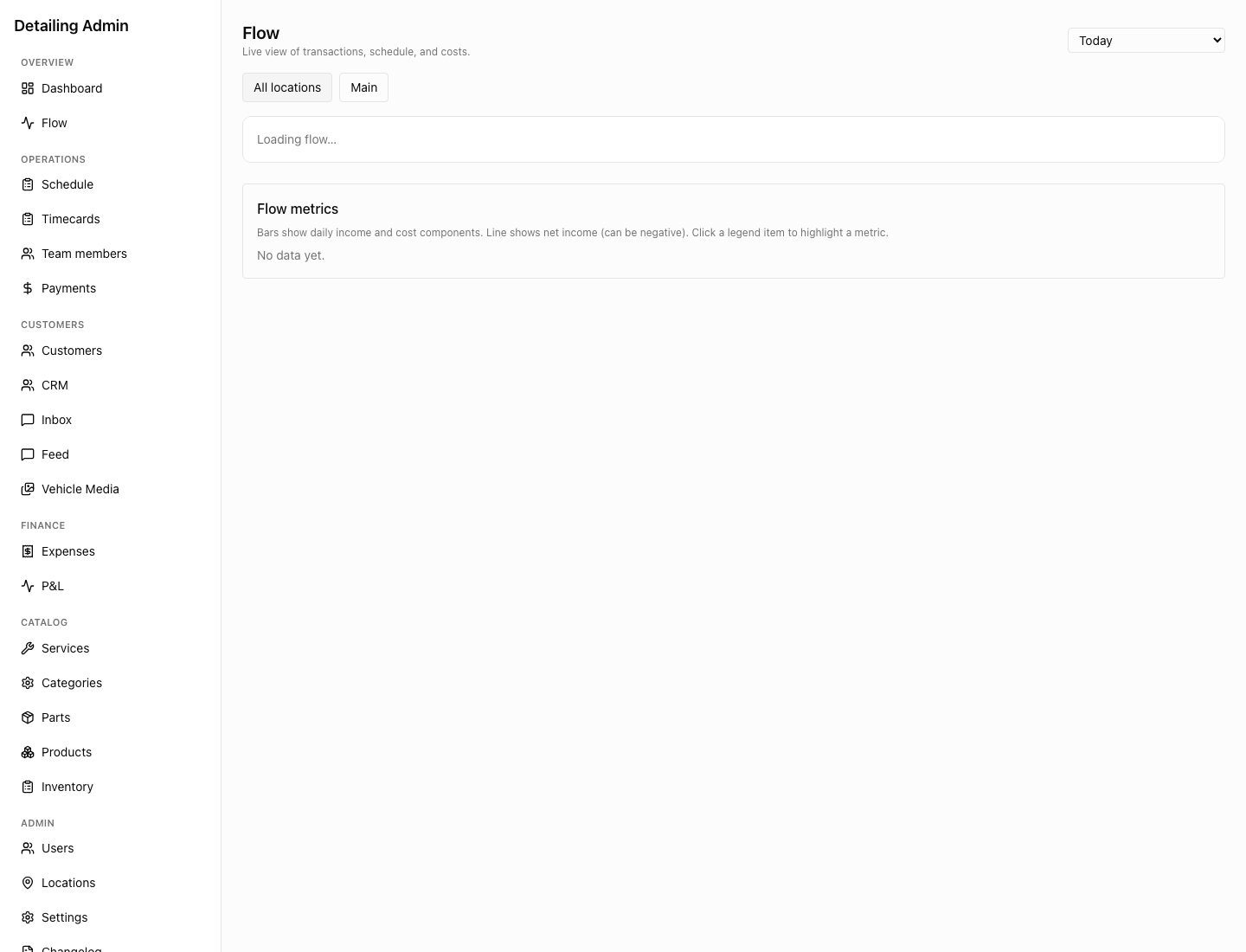
Operations flow
Product system
CRM / marketplace platform / 14-service microservice architecture
Marketing site
Quote intake
CRM workspace
Marketplace
14 microservices
Customer records
Scheduling
Revenue visibility
Auth, billing, catalog, CRM, customer, default location, expenses, invoice builder, media reference, omnichannel, payroll, P&L, schedule, social, and workforce domains.
Extensions expose dependencies, permissions, entitlements, install state, uninstall behavior, and preserved tenant data.
The system connects customer intake, reminders, forms, owners, transactions, schedules, and reporting into daily shop workflow.
Outcomes
01 / 05
Public quote website
The customer-facing Garage 7 site turns ceramic coating, tint, and detailing services into quote paths instead of a static brochure.
01
Built a public service site that routes demand into structured quote and intake flows.
02
Created an internal CRM workspace for leads, customers, reminders, public forms, and owner assignment.
03
Split the platform across 14 microservices covering auth, billing, catalog, CRM, customer, location, expenses, invoices, media, omnichannel, payroll, P&L, schedule, social, and workforce domains.
04
Added a module marketplace so each tenant can install extensions, accept permissions, and preserve data when modules are turned off.
05
Connected the marketing layer with the admin layer so the business can operate from the same product system.
Marketplace platform
GarageLink does not force every shop into the same heavyweight setup. The marketplace lets a tenant start with core workflows, then add CRM, services, invoice builder, schedule, workforce, website, email, social, and reporting modules when the business needs them. Each install can expose dependencies, permissions, entitlement checks, and data-retention rules.
Technology stack
The stack was selected around the delivery goal, production constraints, operating model, and future iteration path.
web app, public site, and admin workspace
typed frontend, API, and service contracts
platform API and service runtime
tenant data, marketplace registry, CRM, and operations data
microservice deployment pattern
web hosting and CI/CD direction
tenant-owned email sending direction
local service isolation and deployment preparation
Start a similar build
Use the same request flow as the main site. We will route the conversation to product strategy, mobile app, CRM/admin, agentic engineering, or launch-site work.